
This guide helps you plan the best outdoor adventure. It offers practical tips, safety advice, and more. You’ll get help from trusted groups like the National Park Service and REI.
Planning a day hike or a big trip? This guide makes it easy. You’ll learn about setting goals, choosing the right gear, and staying safe. It’s all about making your adventure fun and safe.
The guide is easy to follow. It breaks down planning into simple steps. You’ll get checklists and tools to help you plan with confidence.
Key Takeaways
- This is the Ultimate Guide to Planning the Perfect Outdoor Adventure.
- Focus on clear goals, matched activities, and realistic skill assessments.
- Learn outdoor adventure planning essentials: gear, safety, food, and Leave No Trace.
- Follow a stepwise approach to make trips safer, more enjoyable, and better organized.
Ultimate Guide to Planning the Perfect Outdoor Adventure
Good planning makes a trip safe and fun. It helps avoid bad weather, wrong turns, and injuries. Following advice from National Park Service and U.S. Forest Service keeps nature safe and makes your trip better.
Why a comprehensive plan makes trips safer and more enjoyable
Good plans reduce surprises. You’ll know about dangers, other paths, and where to find help. This lowers stress and lets you enjoy the trip more.
Groups that plan well use ranger stations and trail reports. This helps them make smart choices. It saves time and protects the environment.
How to use this guide: step-by-step vs. modular planning
There are two ways to plan. The step-by-step method is for detailed plans. It’s good for long trips.
Modular planning is for quick tasks. You can focus on gear, permits, or navigation. Keep all your plans in one place.
A trip card is a great idea. It has the route, emergency contacts, and water sources. It’s easy to carry and share.
Key outcomes: what you’ll achieve by following these strategies
Good planning leads to great trips. You’ll match your skills with the activity and choose the right season. You’ll also have a detailed plan for each day.
You’ll make a complete list of gear and plan for emergencies. You’ll also follow Leave No Trace to protect nature. Your plan will include a budget and permit schedule to avoid surprises.
| Outcome | Why it matters | Practical deliverable |
|---|---|---|
| Activity–skill match | Reduces injury risk and improves enjoyment | Skill checklist and chosen route difficulty level |
| Season-ready destination | Avoids extreme weather and access closures | Seasonal notes and alternate dates |
| Itinerary with contingencies | Keeps the group on track when plans change | Day-by-day plan and bailout options |
| Complete gear list | Prevents forgotten essentials and overpacking | Packed checklist grouped by role and weather |
| Emergency and communication plans | Ensures timely help and clear protocols | Contact list, satellite options, and PLB plan |
| Leave No Trace practices | Protects ecosystems and future access | Campsite selection rules and waste plan |
| Budget and permits | Prevents last-minute fees and access problems | Cost breakdown and permit timeline |
Start with these tips and adjust them for your trip. The right planning makes every outdoor adventure better for everyone.
Setting clear goals and choosing the right outdoor activity
First, decide what you want from your trip. Do you want to relax, get fit, or explore new places? Knowing your goal helps pick the right distance, elevation, gear, and permits.
Think about who’s coming with you. Check everyone’s fitness, camping skills, and map reading abilities. This helps choose the right activity for your group.
For tricky activities, consider getting a guide. Guides from the American Mountain Guides Association or local outfitters can help. They make sure you’re safe on climbs or whitewater trips.
Look at different activities to find the best one. Day hikes are great for a calm day. Long hikes and backpacking are for those who love a challenge. Kayaking and climbing need special gear and skills.
Use good sources to plan your trip. Check AllTrails for trail info, USGS for river conditions, and National Geographic for climbing routes. These resources help make your plan better.
Here’s a quick guide to help pick an activity:
| Activity | Best for | Skill/fitness needed | Key gear |
|---|---|---|---|
| Hiking (day) | Relaxation, short exploration | Low to moderate fitness; basic navigation | Daypack, boots, water, trail map |
| Thru-hiking / Long trek | Endurance challenge, deep exploration | High fitness; route-finding, resupply planning | Backpack, lightweight shelter, food caches |
| Backpacking | Overnight exploration, multi-day travel | Moderate to high; campcraft and navigation | Shelter, sleep system, stove, navigation tools |
| Kayaking | Water exploration, technical challenge | Varies: flatwater (low) to whitewater (high skills) | PFD, helmet for whitewater, river gauge checks |
| Climbing | Technical challenge, objective-focused | High; rope skills, belaying, anchor building | Helmet, harness, rope, protection or guide service |
| Multi-sport expedition | Complex exploration, varied objectives | High; multiple technical skills, logistics | Combined gear sets, resupply plan, transition kit |
Make a skills list to practice before you go. This includes map reading, river crossing, and setting up camp. Practice these to make your trip easier and safer.
As you plan, remember to check permits, seasons, and access. Making these decisions early makes planning easier and safer.
Researching destinations and seasons for optimal experiences
Good research makes a trip safe and memorable. Look at terrain, access, permits, and crowds before setting dates. This helps choose a route that fits your skills and schedule.
First, check the terrain and how to get there. Look at elevation gain, technical parts, and trail surface. Find out if you need a special vehicle to start.
Also, check if winter chains are needed and if roads close in certain seasons. This affects when you can arrive.
How to evaluate destinations: terrain, access, permits, and crowds
Get permits early for places like Yosemite and Zion. Check the National Park Service and Bureau of Land Management websites for rules and reservations. Local ranger stations can give you the latest on closures or dangers.
Look at how crowded it is by day of the week. Choose times when it’s less busy for more peace. Make sure your route and campsite fit the expected number of visitors.
Seasonality and weather patterns in the United States
Weather in the US changes by region. The Pacific Northwest is wet in fall and winter. The Sierra Nevada has snow late into spring.
Deserts get very hot in summer and have monsoons in the Southwest. Coastal areas face hurricane risks in late summer and fall. Use NOAA forecasts and climate data to find good weather times. Always be ready for sudden changes and pack layers and a shelter.
Using local resources: ranger stations, guide services, and community forums
Call or email ranger stations for the latest trail reports and permit info. Local outfitters and guides can help with tough terrain and gear choices.
Read recent trip reports on Reddit r/CampingandHiking, Gaia GPS, and local Facebook groups. Mix official info with community feedback for a balanced view.
| Planning Step | What to Check | Best Resources |
|---|---|---|
| Terrain and access | Elevation gain, technical sections, road type, season closures | Topographic maps, trail guides, National Park Service pages |
| Permits and quotas | Permit windows, quota limits, reservation processes | Park websites, Recreation.gov, state park offices |
| Weather and seasonality | Regional patterns, snowpack timing, monsoon/hurricane risks | NOAA forecasts, historical climate data, mountain weather services |
| Local beta | Trail conditions, water sources, recent hazards | Ranger stations, guide services, Reddit and Gaia GPS reports |
| Crowds and timing | Weekend peaks, holiday surges, shoulder-season advantages | Trail traffic analytics, park advisories, trip report timestamps |
Using these tips well helps plan better trips. Make researching destinations and seasons a key part of planning. It’s essential for a great outdoor adventure.
Developing a detailed outdoor adventure itinerary guide
Creating a clear plan makes outdoor trips easy and fun. Start with a simple day-by-day plan. It should list the day’s goals, like how far to go and how high to climb. Keep a digital copy and a printed version for quick checks.
Creating a day-by-day plan with contingencies
Break each day into parts with expected times. Use rules like Naismith’s to set goals. Remember to note where to find water and where to camp.
Plan extra days for long walks or bad weather. Add extra time for slow walkers and unexpected stops.
Pacing, rest days, and mileage planning for sustainable progress
Choose daily walks that fit the terrain and your group’s fitness. For mountains, 8–12 miles a day is good for many. Walk less on steep or high places.
Include days off to rest and get used to the altitude. Think about daylight, how fast you walk, and times for things like crossing rivers.
Integrating points of interest and experience-based goals
Mark special spots like views and cultural sites as goals. Add fun goals like fishing or climbing on easy days.
Check if you need permits and know the rules for your stops. Use these goals to keep everyone excited and track your journey.
Essential gear and packing strategies for outdoor adventure trip planning
Planning gear for a trip is all about finding the right balance. Use checklists from REI and Backpacker magazine as a starting point. This guide will cover the basics, clothing systems, and how to pack light for hiking, paddling, or climbing.
Core gear checklist: shelter, sleep system, navigation, and cooking
Start with a shelter that fits your route. Choose a tent, tarp, or bivy that’s right for your conditions. Make sure it matches the season and how many people you’re with.
Get a sleeping bag that’s warm enough for the lowest expected temperature. Add a good sleeping pad for extra warmth. A compact pillow or clothes stuff sack can also help you sleep better.
Don’t forget navigation tools like topo maps, a compass, and a GPS or smartphone app. Bring extra batteries or a power bank too.
For cooking, pack a lightweight stove, fuel, a pot, and a windscreen if needed. Include a lighter and waterproof matches. Don’t forget personal items like a headlamp, repair kit, multi-tool, toiletries, and any permits or ID.
Clothing systems and layering for variable conditions
Use a three-layer clothing system. Start with a moisture-wicking base layer to stay dry. Add a midlayer like fleece or a down jacket for warmth.
Finish with a breathable waterproof shell like Gore-Tex to keep out wind and rain. Don’t forget sun protection, a brimmed hat, gloves, and gaiters when needed. Choose the right shoes for your activity.
Look for durable brands like Patagonia, Arc’teryx, and Outdoor Research. They offer good options for different seasons and activities.
Lightweight packing tips and gear selection by activity
Choose items that can be used in more than one way to save weight. Swap a heavy fleece for a light down layer that you can compress. Decide between down and synthetic insulation based on whether you’ll be in wet weather and how fast it dries.
Plan your food carefully. Choose dehydrated meals and snacks that are high in calories for long days. Using ultralight shelters and stoves can save a lot of weight for long trips.
Match your gear to your activity. For kayaking, you’ll need paddles and a PFD. Climbers should bring a rack, helmet, and harness. Trekking poles can help reduce fatigue on long hikes with heavy packs.
Use these tips to plan your gear and pack light. This way, you can stay safe without carrying too much.
Safety, navigation, and emergency preparedness
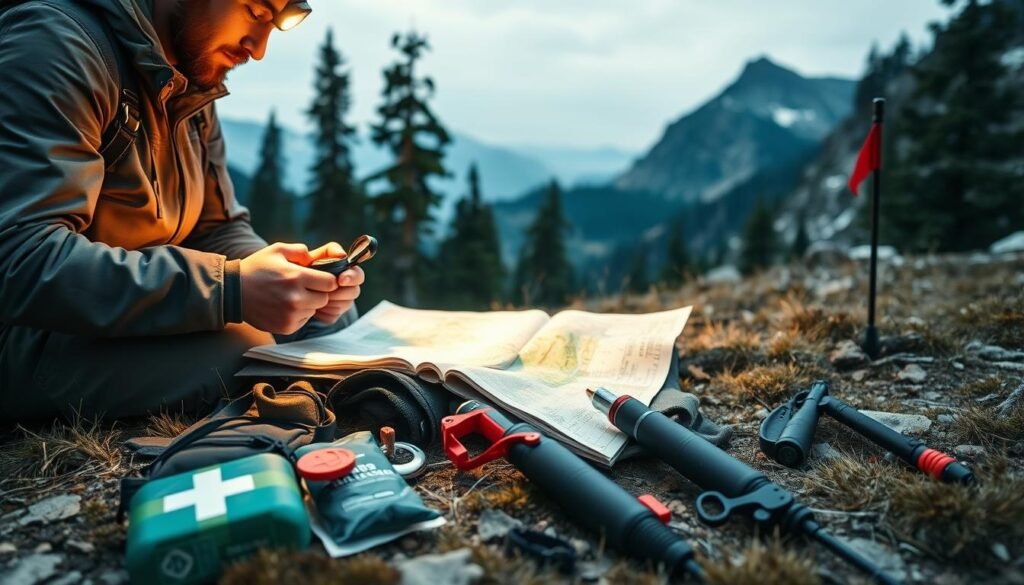
Planning well makes trips fun and safe. Use safety steps that include basic skills, gear, and clear talk. These tips help you use tools today and build good habits for your group.
Navigation tools
Always carry paper maps and a compass. Practice using them before you go. Add a GPS device or app like Garmin or Gaia GPS for tracking routes.
Download offline maps and pack extra batteries or a power bank. Mark evacuation routes and trails on maps.
Wilderness first aid
Make a first aid kit for your group and place. Include items for blisters, bandages, splints, and hypothermia. Learn how to stop bleeding, treat shock, and splint fractures.
Consider getting training from the Wilderness Medical Society or American Red Cross. This helps you make the right decisions in emergencies.
Communication options
Compare satellite messengers like Garmin inReach with personal locator beacons like ACR PLB. Satellite messengers let you send messages and track. PLBs send a distress signal with long battery life and no subscription.
Plan your cell use by mapping coverage. Use antennas when you can and carry charging solutions. File a trip plan with someone you trust and use park registries when you can.
Clear check-ins and a plan for rescue improve safety. Use different ways to communicate and prepare for emergencies on every trip.
| Item | Purpose | Pros | Cons |
|---|---|---|---|
| Paper topo map & compass | Primary low-tech navigation | Always works, no batteries, durable | Requires skill, slower to use |
| GPS device / App (Garmin, Gaia GPS) | Route tracking, offline maps | Accurate location, route recording, offline mode | Battery dependent, can fail if damaged |
| Satellite messenger (Garmin inReach) | Two-way messaging and tracking | Contact rescuers, share location, track progress | Subscription costs, battery life limits |
| Personal Locator Beacon (ACR PLB) | One-way distress signal to rescuers | Reliable emergency alert, long battery life | No two-way communication, requires rescue coordination |
| Wilderness first aid kit | Treat injuries and stabilize patients | Targets common field injuries, customizable | Must be matched to group size and skills |
| Trip plan & park registry | Inform authorities and contacts | Speeds search, clarifies timelines | Relies on someone checking the plan |
Food, water management, and nutrition for sustained performance
Good food and water plans keep your energy up and mood high. Use simple rules to match food to your activity. This makes planning easier and improves your trip.
Meal planning: calorie needs by activity intensity
Figure out how many calories you need before you go. Day hikes need 2,000–3,000 kcal. Backpacking or hard days need 3,500–5,000+ kcal.
Choose foods that are light but full of calories. Try dehydrated meals, nuts, Clif bars, and cured sausage. Eat snacks and meals to keep your energy up.
Water sourcing, treatment, and carry strategies
Find water sources on your route and carry enough for dry areas. Ration water when it’s hard to find. Stay cool during the hottest hours.
Use filters, iodine, chlorine, or UV devices to treat water. Keep water in clean containers. Have a backup plan if your main method fails.
Lightweight cooking gear and no-cook alternatives
Choose a stove that fits your trip and budget. Canister stoves and Jetboil systems are great for quick meals. White-gas stoves work well in cold weather.
For short trips or warm weather, try no-cook meals. Snacks, soaked oats, nut butter, and ready-to-eat pouches are good options. They save weight and make planning easier.
Be flexible with your meal plans. Test foods at home and adjust as needed. Good plans help you enjoy the trip more.
Leave No Trace principles and responsible nature exploration planning tips
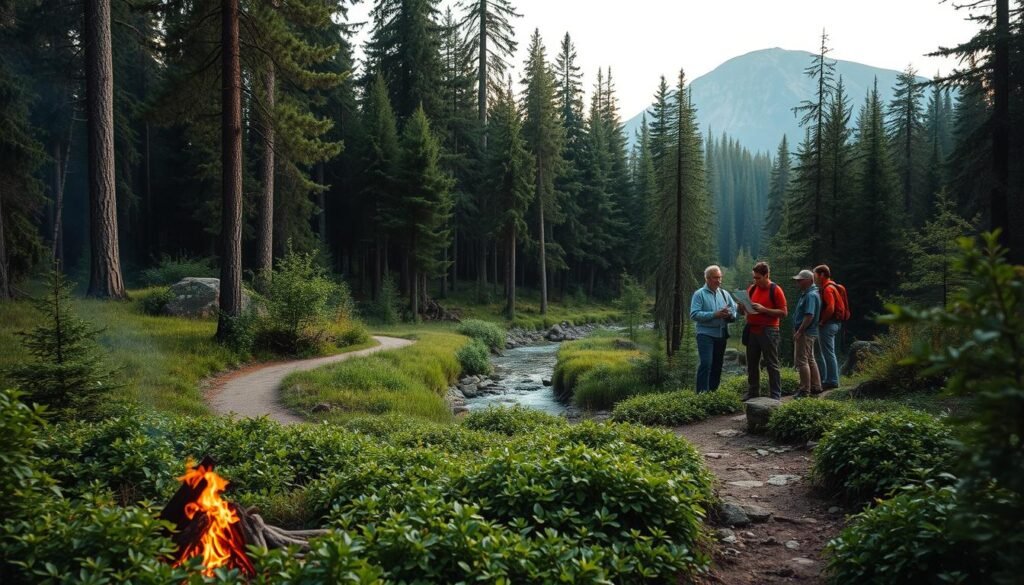
Planning well keeps wild places wild. Use Leave No Trace tips for planning routes, camps, and gear. These steps reduce impact and make trips safer for everyone.
Core ethics for day trips and overnight trips
The seven Leave No Trace principles guide every outing. Plan ahead and prepare to avoid surprises. Travel and camp on durable surfaces to protect plants.
Dispose of waste properly to keep water and soil clean. Leave what you find to honor natural and cultural features. Use a camp stove or approved fire rings to minimize campfire impacts.
Respect wildlife by keeping distance. Be considerate of other visitors to maintain shared enjoyment.
Minimizing impact: campsite selection, waste packing, and fire safety
Choose established sites and avoid trampling plants. Stay at least 200 feet from lakes and streams when camping or relieving yourself. Pack out all trash and use Wag Bags or similar systems where local rules require packing out human waste.
Follow fire regulations and prefer a lightweight stove when fires are banned or risky. When fires are allowed, use dead-and-down wood, keep fires small, and fully extinguish embers. Clean food scraps from cookware to prevent wildlife attraction.
In bear country, use hard-sided canisters like BearVault or Garcia to store food and toiletries.
Respecting wildlife and culturally sensitive areas
Watch animals from a distance with binoculars. Never feed wildlife. Habituated animals become a danger to people and themselves.
Keep pets leashed where required and follow seasonal closures that protect nesting or breeding species.
Treat cultural sites with care. Avoid touching petroglyphs, artifacts, or ceremonial areas. Follow rules set by National Park Service staff, Bureau of Land Management, and tribal authorities. Report damage or disturbances to rangers so sites receive timely protection.
Below is a quick checklist to use during trip planning and in the field. It makes nature exploration planning tips and responsible outdoor adventure planning easy to follow.
| Planning Phase | Action | Why it matters |
|---|---|---|
| Pre-trip | Check regulations, closures, and permit needs | Prevents fines and protects sensitive periods for plants and animals |
| Route selection | Choose durable routes and group size limits | Reduces erosion and footprint on fragile terrain |
| Campsite choice | Use established sites; stay 200 ft from water | Protects riparian zones and water quality |
| Waste management | Pack out trash and use Wag Bags where required | Prevents pollution and wildlife encounters |
| Fire strategy | Use stove or existing rings; follow local rules | Limits wildfire risk and wood depletion |
| Food storage | Use bear canisters and clean cooking gear | Stops wildlife habituation and protects visitors |
| Cultural respect | Observe closures and avoid artifacts | Preserves heritage sites and honors tribal authority |
| On-trail conduct | Yield, speak quietly, follow trail etiquette | Maintains experiences for others and reduces conflicts |
Logistics, permits, and budgeting for planning an outdoor expedition
Good logistics make a dream trip real. Access, permits, and money are key parts of planning. Taking small steps early reduces stress and keeps the focus on the adventure.
How to secure permits and plan access routes
Start by figuring out what permits you need. This includes day-use passes, overnight permits, and fishing licenses. Use Recreation.gov for federal lands and state park portals for regional sites.
Places like Yosemite need lottery entries for popular routes. Remember to apply on time and have backup dates. Check road conditions and parking limits for access routes.
Transportation, shuttles, and resupply options
Choose between point-to-point or loop routes. For point-to-point trips, arrange a shuttle or hire a private outfitter. National park shuttles run on fixed schedules.
Resupply can be by mail, town shopping, or scheduled caches. Check town store hours and seasonal closures. Plan for delays and note any COVID-era changes.
Budgeting: costs to expect and ways to save
Costs include permits, gas, gear, and food. Add an emergency fund and a contingency line for changes. Renting gear can save money.
Save by borrowing, sharing, cooking simple, and carpooling. Travel in shoulder seasons to avoid crowds and save on fees.
Plan well for permits and budgeting. Tackle permit windows early and map transport and resupply points. Set a clear budget with a 10–20% contingency for surprises.
Conclusion
This guide helps you plan the perfect outdoor adventure. Start by setting clear goals and researching the best times and places. Make a strong plan and choose the right gear.
Remember to stay safe and communicate well. Plan your food and water, follow Leave No Trace, and manage your budget. Each step makes your trip safer and more fun.
Now, let’s make planning easier. Create a master plan and book permits early. Check your gear and go on test trips. If you’re new to the outdoors, take a wilderness first aid course.
Always tell someone where you’re going and test your communication devices. Use the tools in this article to help plan your adventure. With good planning, your outdoor time will be safer and more enjoyable.
Planning your outdoor adventure is worth it. It makes your memories better and helps protect nature for others to enjoy.